Sunday, 30 January 2011

Bread Recipes and Sourdough Starters


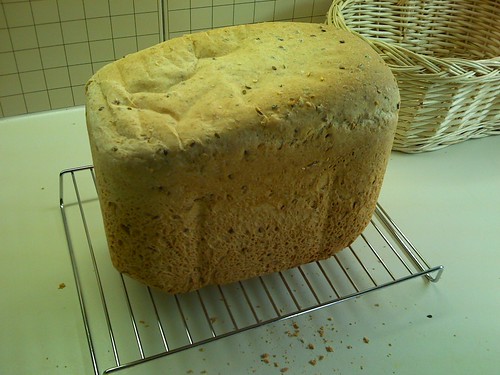
Sourdough used to be made using wild yeasts. The wild yeasts, particularly in San Francisco create a special flavor in breads. A number of sourdoughs are actually hundreds of years old. The starter or sponge is described as a water and flour mixture that has the yeast used to rise the bread. You can get dried versions of these too and activate these. You can make your own sourdough starters by acquiring local wild yeasts.

About Yeast Measurements

When using different kinds of yeasts in bread making recipes, you have to ensure that the conversion is accurate. Multiply the amount of instant yeast by 3 to get the corresponding amount of fresh yeast. Multiply the amount of active dry yeast by 2.5 to get the corresponding amount of fresh yeast. Multiply the amount of instant yeast by 1.25 to get the corresponding amount of active dry yeast.

More Info

The expiration date of yeast is printed on the package. Yeast can expire, and usually lasts longer than the date printed on the packet if it is kept inside the refrigerator. I can last longer if placed inside the freezer. Testing yeast can be done using sugar. To test, you can add 1/2 teaspoon of sugar to the yeast when stirring it into the water to dissolve. If the yeast foams and bubbles within 10 minutes, the yeast is described as active and alive.

The Yeast Starter

You can easily make your own yeast start by taking equal parts of water and flour. Mix them together and leave everything in a warm location. Leave the mixture for 2 days. Afterwards, the starter should appear frothy. The flour and water should have developed by then. The water will also have a distinct smell at the top. This will be the starter of wild yeast.

Making Sourdough Starters

To make sourdough starters, take a cup of starter from a known bakery. Add water and flour to the starter to make more. The starter can go on for decades. You can make the sourdough starter using normally packaged yeast that you can purchase at a local dealer. You can also purchase packaged sourdough starter mix at the grocery. The internet actually now has several dealers and sellers of sourdough starter mixes. All you need to do is make the order, pay the seller through money transfer or credit card, and have the item shipped right to your doorstep in a few days.

Using the Starters

Make sure you save up some of the homemade starters so you can continue developing these for months and years to come. You will need the yeasts and sourdoughs depending on the type of bread you want to make. You will find that these also lead to certain features and characteristics, depending on how much you put in and the kind of ingredients that you add to the mix. Make sure you also place the starters in the right container, so that these do not expire and you retain the properties that lead to quality and great taste.

Thursday, 27 January 2011

Mouth Watering Bread Machine Recipes

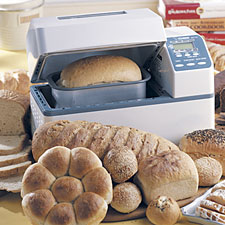
If you're getting a little tired of using the recipes that came with your bread machine, why not be a little adventurous and try out some new ones. You can find thousands of free bread maker recipes online and just about all are child's play. Here's just a few to whet your appetite.

Fall Harvest Bread

For many, fall and the approach of winter is the signal to get the bread machine out of the closet. The following recipe is an easy to make and tasty bread that uses autumn seeds.

Ingredients - this will make a 1.5 to 2lb loaf

1 cup warm water

1 (.25 ounce) package yeast

1/4 cup honey

4 teaspoons vegetable oil (you can also use olive oil)

3 cups whole wheat flour

1/4 cup wheat bran (optional)

1 teaspoon salt

1/3 cup sunflower seeds

1/3 cup shelled, toasted, chopped pumpkin seeds

Directions

Apart from the seeds, put all the other ingredients into the bread pan in the order recommended by the manufacturer. Select the whole wheat cycle and press start. Add the sunflower and pumpkin seeds when your machine signals you to do so at the 'add extras' part of the cycle. Just before the bake part of the cycle you can brush on some beaten eggs on top of the dough loaf and sprinkle on some of the seeds.

Oatmeal and Fruit Bread

This recipe makes a moist loaf that is sweet and is a favorite with children.

Ingredients - this will make a 1.5lb loaf

1/2 cup of old-fashioned rolled oats

5/8 cup of water

1/2 cup of unsweetened applesauce

2 3/4 cups of bread flour

1 1/2 teaspoons of salt

2 tablespoons of brown sugar (white can be used instead)

1 1/2 tablespoons of nonfat dry milk powder

1 1/2 tablespoons of butter (margarine can be used instead)

1/2 cup of raisins

2 teaspoons of ground cinnamon (or mace if your prefer)

2 teaspoons of active dry yeast

Directions

Put all the other ingredients into the bread pan in the order recommended by the manufacturer. Select the basic bread cycle with the light crust option and press start. The loaf should be left to cool for at least one hour after baking.

Easy Potato Bread

This is an old favorite; however this is a breeze to make as it uses instant potato flakes rather than raw potatoes.

Ingredients - this will make a 1 1/2lb loaf

3/4 cup of milk

3/8 cup of water

1 1/2 tablespoons butter (or margarine)

3 cup bread flour

1/4 cup instant potato flakes

1 1/2 tablespoons granulated sugar

1 1/2 teaspoons salt

2 teaspoons active dry yeast

Directions

Put all the ingredients into the bread pan in the order recommended by the manufacturer. Select your machine's basic bread cycle.

I hope the 3 recipes above tickled your fancy. As you can see both preparation and baking is extremely simple, so even the most time-constrained baker can use them. Remember, there are far more free bread machine recipes online, so if the ones above don't appeal you're sure to find plenty of others that will.

Follow the links for more delicious bread machine recipes as well as bread machine reviews on leading brands like Oster, Zojirushi and the Cuisinart bread machine.

Article Source: http://EzineArticles.com/?expert=Robin_Cassidy
http://EzineArticles.com/?Mouth-Watering-Free-Bread-Machine-Recipes&id=943518

Saturday, 22 January 2011

Breadmachine Recipe for Newbies

Breadmachine Recipe for Newbies

Back when I was living in Japan, I acquired a bread machine from the Japanese equivalent of FreeCycle mailing list. I'd always wanted one, though I have no idea why. I then spent the next 6 weeks making a new loaf of bread everyday, experimenting with various recipes and perfecting them. My house guests were rather pleased with the results, though I must admit I hid a few of failures. I thought I'd pass on some of that knowledge today along with a quick and basic easy first recipe to get you going with your new bread machine. This article is really aimed at guys like myself who fancy making delicious bread, but really have zero experience.

Quick Bread Science and Tips:

Bread rises because of the yeast, so you're absolutely going to need to go out and buy some. Buy in bulk, if you can, as you will be using a lot when your first recipe goes well! Buying the small packets of yeast might be convenient, but you're about 5x more for that convenience. Also, don't make the same mistake as me in thinking that baking powder (for baking bread?!) and yeast are the same thing, because, well, they aren't.

Most important tip I'm going to give you - the order in which you put things in the machine is crucial. Start with wet stuff - warm water, eggs, anything like that. Then on top of that put the flour, and finally the yeast. The reasoning behind this? You don't want the yeast to get wet before it's been properly mixed in, or you will use up it's magical power. And that stuff truly *is* magic.

Also, try not to bang and crash around the kitchen, or knock the bread machine at all while your bread is rising. If you do, the air will escape and your bread will fall flat, which isn't cool. In fact, just sit and play some video games or something.

Onwards, our first ever bread machine recipe is going to be... Rosemary. It smells fantastic and you may find your neighbours coming round increasingly often.

Ingredients:

- 3/4 cup water

- 2 tablespoons olive oil

- 2 cups flour

- 1 tablespoon salt

- 1 and a half tablespoons sugar

- 1 and a half tablespoons rosemary

- 1 tablespoon yeast

Instructions:

Really, you need instructions? It's a bread machine, you literally just put everything in there (in the order I've listed above), set the cycle to normal bread, and press go. And remember what I said about banging things while it's rising.

This bread will go really well with a simple soup, but personally I suggest dipping it in some balsamic vinegar with some extra virgin olive oil. If you've never heard of this it might sound a little strange, but believe me it's tasty. Just pour a tablespoon of balsamic vinegar into a little bowl, and 2 or 3 tablespoons of olive oil on top of that. Don't mix them, just dip the bread in it like that. You might the oil is unhealthy, but far from it. Turns out olive oil is actually very healthy for you.

When you feel like making some more bread, try a bread machine recipe from this stash of tried and tested formulas.

Article Source: http://EzineArticles.com/?expert=James_A_Bruce
http://EzineArticles.com/?Breadmachine-Recipe-for-Someone-Whos-Never-Made-Bread-Before&id=5351645

Wednesday, 19 January 2011

More Bread Maker Recipes

More Bread Maker Recipes

Bread maker machines have become enormously popular in recent years and it is not difficult to understand why, when you can simply pop in the ingredients and let the machine make fabulous bread for you.

Below is 2 delicious recipes for you to prepare today:

1. 100% Stone Ground Whole Wheat Bread

Amount Measure Ingredient - Preparation Method:

- 3 cups 100% Whole Wheat Flour-level
- 3/8 cup Wheat gluten flour-level
- 1 1/2 cups Water at 110 degrees
- 3 tablespoons Honey
- 4 teaspoons Active dry yeast
- 2 teaspoons Salt-heaping

Directions:

- Mix in separate bowl, flour, gluten flour and salt.
- Pour water into bread pan. It is important to use thermometer and that the water be 110 degrees.
- Sprinkle yeast into the water. Stir with wooden spoon until yeast is thoroughly dissolved.
- Add honey. Stir with wooden spoon until honey is thoroughly dissolved.
- Add flour mixtures.
- Gently stir in each corner of pan to help mix mixture.
- Place container in bread machine.
- Put on Bread menu (medium or light).
- Bread Freezes well.

2. 100% Whole Wheat Bread for Bread Machine

Amount Measure Ingredient - Preparation Method

Regular Loaf

- 1 cup Water
- 2 1/2 cups Wheat bread flour
- 1 1/4 tablespoons of Dry milk
- 1 teaspoon Salt
- 1 1/2 tablespoons Butter
- 1 1/4 tablespoons Honey
- 1 tablespoon Gluten
- 2 teaspoons Molasses
- 1 1/2 teaspoons Fast-Rise yeast *** OR ***
- 2 teaspoons Active-Dry yeast

Large Loaf

- 1 1/2 cups + 2 tb Water
- 3 3/4 cups Wheat bread flour
- 2 tablespoons Dry milk
- 1 1/2 teaspoons Salt
- 2 tablespoons Butter
- 2 tablespoons Honey
- 1 1/2 tablespoons Gluten
- 1 tablespoon Molasses
- 2 1/8 teaspoons Fast-Rise yeast *** OR ***
- 3 teaspoons Active-Dry yeast

Directions:

The trick to making 100% whole wheat bread in your machine is an extra knead, which gives the yeast and gluten a second chance to create a lighter loaf.

When your first knead cycle is completed, simply reset the machine and start again. Some manufacturers produce home bakeries with a whole wheat cycle; If your machine doesn't have one, this start- again method works as an easy alternative.

Success Hints:

The gluten gives the whole wheat flour the structure necessary for a good loaf. If your market doesn't stock wheat gluten, try your local health food store. Remember the extra knead. It's especially important in 100% whole wheat bread. Because of the extra knead, use this recipe only on the regular bake cycle.

Want more recipes? You welcome to visit our website: The Recipes Package and Affordable Pasta Salad Recipes for more delicious recipes.

Article Source: http://EzineArticles.com/?expert=Lucille_Green
http://EzineArticles.com/?Magic-Chef-Bread-Maker-Recipes&id=1733984

Sunday, 16 January 2011

How to Make Bread


Bread has been a staple food of human beings for hundreds of years. However, almost majority of people still do not know how bread is made. The process is actually very simple, although more advanced techniques are also used to make special kinds of bread. Overall, the principles are very much the same. It is important that you practice safety at all times and watch how the experts do it to get the most benefits. Here are some tips and tricks.

The Ingredients

To begin, you will need 16 ounces of bread flour and a bit more for shaping. Get 1 teaspoon of instant rapid rise yeast, 2 teaspoons of salt and 10 ounces of filtered water. You will need more of these ingredients if preparing for more people.

Other optional ingredients you may need include 1/3 cup of water, 2 teaspoons of honey or sugar and 1 tablespoon of cornstarch. Functional ingredients include 2 quarts of hot water, 2 tablespoons of cornmeal and vegetable oil to grease the rising container.

The Process

Mix 5 ounces of flour together with 1/4 teaspoon of yeast, the bottled water and all of the honey inside a straight-sided container. Cover everything loosely then refrigerate for a period of 8 to 12 hours. Leaving everything overnight is recommended. Yeast does a couple of things for bread. First, it leavens the bread and second, it adds texture and flavor to the bread. To properly leaven the bread, the yeast has to be reproduced immediately to create the gasses found inside. Reproduction has to be slow to give the right texture and flavor.

Make the sponge or pre-ferment. Put the yeasty mixture into the refrigerator and slow down the whole fermentation procedure. The dough will absorb some of the gasses left by the yeast, leading to softer dough later on. The bread will also have an aged flavor. The added hydration and time will form gluten strands which are essential for bread dough.

More Steps

Next, put the 11 ounces of flour, the rest of the yeast and all the salt into the bowl of a stand mixer. Add the pre-ferment you made from the refrigerator. Use the dough hook attachment to knead the mixture on low for 2 to 3 minutes until everything mixes. Cover the dough in the bowl using a kitchen towel and let everything rest for 20 minutes. Knead the dough on medium speed for 5 to 10 minutes after 20 minutes or until you can slowly pull the dough into a sheet, wherein light passes through. The dough will be sticky, but not so much that you cannot manage well.

Final Process

Flatten the dough using your knuckles, then fold it into itself. Put the dough back on the counter and roll slowly between your hands. Heat the oven to 400 degrees F. Slash the top surface of the dough balls about 1/2 inch deep. Add more hot water if the pan tends to be dry. Once the bread reaches an internal temperature of about 210 degrees F, remove it and place on a cooling rack. Let it sit for 30 minutes then slice.

Tuesday, 11 January 2011

Make Sourdough

Make Sourdough

You can easily make sourdough to give your bread that distinct sour taste. You will find that there are also other of good sources for it like your local grocery store or online. Over time, the process becomes easier, since you already have a pattern of making more to last you for several years. Here are some tried and proven tips to get you started.

To Begin

You will need 2 cups of all-purpose flour, 2 teaspoons of granulated sugar, 2 cups of warm water and 1 packet of active dry yeast. Mix the sugar, yeast and flour in a clean container. Stir the water in and mix continuously until you make a thick paste. Take a dish cloth to cover the container and let it sit at 80 degrees F. The dish cloth will allow wild yeasts to go through into the batter. The mixture will start to bubble as the fermentation process begins. You will notice foam building up as it develops.

You can put the container in the sink. Sourdough can be difficult to clean after it has spilled out onto the counter and dried. Let the mixture sit out anywhere between 2 and 5 days. You can stir it once a day. The starter will be ready when it develops a good sour smell and appears bubbly. As soon as the starter begins to bubble, you can begin feeding it once a day with water and flour according to the directions given. Stir everything in the mix, then cover with a plastic wrap loosely. Provide some breathing room and store on the counter top or inside the refrigerator.

Feeding the Starter

The sourdough starter should be fed daily if you leave it sitting on the counter. You should feed it every other week if kept refrigerated. For counter top stored sourdough starters, remove 1 cup of starter once a day and substitute with a cup of warm water (about 105 to 115 degrees F), plus a cup of flour. Let everything sit for a few hours. Cover the mixture to become active before you use it to make bread.

Refrigerated Sourdough

Refrigerator stored sourdough starters can consume a lot of time and should be fed everyday. You may need another person to continue feeding the starter if you are going out of town for a few days. If you decide to use the starter. Take it out of the refrigerator and allow it to warm to room temperature. It might take a whole night to make this work. Feed it with a cup of water and a cup of flour. Let everything sit for 8 hours or overnight. You may now use it for different sourdough recipes.

If you have stored sourdough starter in the refrigerator for a few months, you may need to feed it 2 to 3 times to activate. Take it out of the fridge 2 to 3 days before using it for baking. Continue the feeding process everyday. If you believe that the sourdough has turned very sour, throw everything away except for a single cup. Add 2 cups of water and 2 cups of flour. Allow it to ferment for 1 day.

Friday, 7 January 2011

Bread Machine Recipes That Are Delicious

Bread Machine Recipes That Are Delicious

A freshly baked bread is not only mouth watering but also nutritious. Can you imagine eating this home made product just from the oven? With the bread machine recipes, one has the opportunity to prepare whatever they please just by following simple steps. If you own a machine and you wish to try on a recipe, then what are you waiting for? Get these ingredients ready and you will be on the way to exploration. 1 cup warm milk, ½ cup apple sauce, 1 egg, 2 table spoon sugar, 2 tables spoon oil, 1 tea spoon salt, 1 egg yolk, 2 tablespoon brown sugar, 2 cups oat, 2 and ½ cups bread flour, 2 teaspoon instant yeast, 2 table spoon gluten, 1 cup raisins and 1 table spoon cinnamon. If you have put these measured constituents ready, its time to get involved in the work.

Put the ingredients in to the bread pan starting with the liquid ones followed by the solid ones in that order. The only item that you wont put in, is the raisins. After this, program the crust setting of the machine to medium. If your machine allows you to set it to the sweet bread cycle, well this is an opportunity for you to do it. If it does not have this cycle, well there is nothing to worry. After it has done the first kneading, add the raisins and let the machine do the rest of the work for you. Remove the pan and get your bread letting it cool. With this flavorful oatmeal loaf, you have already succeeded in putting one of the bread machine recipes into practice.

Some of the important points worth noting are that some machines may not be able to produce good consistent dough. Thus if whatever you own has probably a vertical kneading paddle, this recipe would not do so good for you better go for the gluten free recipes. These include the white bread or those without the whole wheat as their ingredients. If your appliance has the horizontal kneading blade, it would be perfect for these heavy whole grain products. You have no reason to worry, as the outcome will be so perfect for you.

The other point worthy considering when trying a recipe is the whether you are a beginner or not. For those with little idea on how to use their machine, it would not be wise to go for the fore mentioned baking instructions. This is because it may take you time in preparation. Go for simpler ones like muffins, scones, and white bread and as you get accustomed to the bread maker, it would be easy to try the more complicated ones.

If you are an expert in this field, this could just be another one of your great experiments ready for implementation. Remember you are not limited to only this simple recipe. There are so many of them available online to help all people. Get the bread machine recipes right from the Internet and it does not matter the level at which you are with your baking hobby. For the apprentice and the expert alike, you will all get whatever that can help you.

G. Smitty is a writer who loves to discuss many topics ranging from Sunbeam breadmaker to professional basketball. Thanks for reading!

Article Source: http://EzineArticles.com/?expert=G._Smitty
http://EzineArticles.com/?Bread-Machine-Recipes-With-A-Delicious-Taste&id=5396557

Tuesday, 4 January 2011

Making Breadcrumbs

Making Breadcrumbs

A lot of individuals do not realize that breadcrumbs serve a variety of functions. You can use these for cooking and adding texture and flavor to different foods like pizza, fried chicken and many more. It is actually cheap and easy to start, considering that you have the right remains with you. Here are some tried and proven tips from the experts to help you.

About Breadcrumbs

Breadcrumbs are used in several food recipes like casseroles and fried foods. You can buy breadcrumbs, but you will find that making your own leads to less waste and more savings. You also get the advantage of added flavor, since you get to pick the contents to work with. You get rid of unwanted chemicals and preservatives the store-bought types offer. Homemade fresh breadcrumbs are on the top of every baker's preferences.

Starting Steps

Gather all your ingredients and tools to start making breadcrumbs. You can make breadcrumbs from virtually any type of bread. You can also mix different kinds of bread. It is an excellent way to use up leftovers, stale bread and the ends of a bread loaf. Remember that you can still taste the flavor and seasonings of the original bread if you consume the crumbs. You need 4 regular slices of bread or a cup of crumbs. Other tools you need include a food processor to turn the bread into crumbs, a knife and a blender. Blenders will save you time and energy to make uniform crumbs, but you can also do well with a basic knife.

Making the Crumbs

Using slices of white bread and trimming the crusts off it will result to uniform breadcrumbs. If you have soft bread, you can leave it on the counter for 2 hours to make it easier to cut. This is useful if you have a food processor or a blender, since soft bread can get gummy inside the machine. You can also place the bread inside a warm oven, until it becomes mildly toasted. Do not overdo the process, however. There is a fine line between the perfect toast and badly burnt bread. Always observe the heating process.

Cutting and Preparation

Cut the bread into small crumbs. Make the smallest pieces possible, especially if you are working with a knife. When using a food processor or blender, tear the bread into small pieces then feed these to the machine one piece at a time. Do not over fill the blender or processor to keep the blades from getting stuck. Pulse the machine until you get the ideal size of breadcrumbs. Add the needed seasonings for flavor such as cheese, herbs and spices. The seasonings should complement the recipe you are trying to follow.

Final Tips

Making a large batch of breadcrumbs will help you save time and energy. Store the extra in a zip-top bag then store inside the freezer. You can easily thaw these in the future if you need to use them. Compare the different flavors and experiment to make your own personalized recipe.